


All Products
-
 Lara Schenk from BelgiumIt is Amazing that Feiming service exceed our expectation, really professional on consulting, customising, delivery, after-sale service.
 -
 Steven from the USAFeiming can supply a variety of high performance material with sufficient inventory, service is really terrific.
 -
 Kurt from SwitzerlandEverything is fine and the people are working on it . When I have some news I will share that then directly with you.
Contact Person :
Kevin Luo
Phone Number :
86-755-85232577
L-Lactide (L-LA) 99.5% Purity for High-Performance PLLA Synthesis and Biomedical Copolymers


| Place of Origin | China |
|---|---|
| Brand Name | NA |
| Certification | COA |
| Model Number | L-LA |
| Document | COA of L-LA_26031702.pdf |
| Minimum Order Quantity | 500g |
| Price | Negotiable |
| Packaging Details | 500g,1kg,10kg,25kg |
| Delivery Time | 3-5 days |
| Payment Terms | T/T, L/C, D/A, D/P, Western Union |
| Supply Ability | 10000kg/month |
Product Details
| Product Name | L-Lactide | Cas No | 4511-42-6 |
|---|---|---|---|
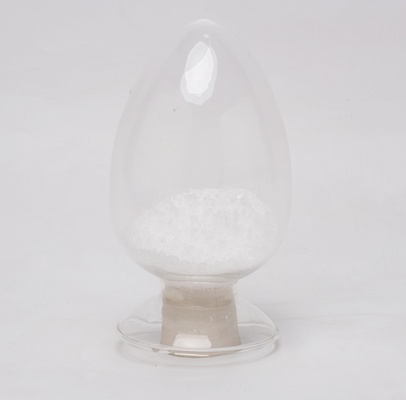
| Synonyms | L-LA;L-(-)-Lactide;(3S,6S)-3,6-Dimethyl-1,4-dioxane-2,5-dione; Purasorb L | Appearance | White Crystal Solid |
| Purity | 99.5% | Melting Point | 96.0~100.0°C |
| Specific Rotation | -255 ~ -270° | Free Acid | < 5 Mmol/kg |
| Water Content | 0.02% | Heavy Metal | < 10 Ppm |
| Application | It Is Widely Used As A Premium Monomer To Synthesize High-performance Poly(L-lactic Acid) (PLLA) And Other Biomedical Copolymers. | ||
| Highlight | 99.5% Purity L-Lactide,High-Performance PLLA Synthesis L-LA,Biomedical Copolymers Purasorb L |
||
Product Description
L-Lactide(L-LA CAS 4511-42-6 ) is one configuration of lactide which is formed by dehydration polycondensation of two molecules of L-lactic acid used to synthesize high-performance PLLA and other biomedical copolymers
Description of L-Lactide(L-LA CAS 4511-42-6)
L‑lactide known as L-LA, is the optically pure cyclic diester of L‑lactic acid and serves as the essential monomer for poly‑L‑lactide (PLLA) synthesis via ring‑opening polymerization. Industrially, it is a white crystalline solid with a molecular weight of 144.13 g·mol⁻¹, a melting point of 95–99 °C, and a boiling point of 255 °C . The compound is hygroscopic and moisture‑sensitive, requiring storage at −20 °C under inert gas. Its specific optical rotation in toluene, [α]D²⁰ = −285° to −300°, provides a direct, quantifiable measure of enantiomeric purity, a parameter that fundamentally determines the crystallinity and mechanical performance of the resulting PLLA .
Applications of L-Lactide(L-LA CAS 4511-42-6)
1. High-Strength Resorbable Implants
PLLA synthesized from enantiopure L‑lactide provides a semi‑crystalline polymer with Tm 173–178 °C, Tg 60–65 °C, tensile modulus 1.5–2.7 GPa, and in vivo degradation exceeding 24 months [REFS‑1]. These properties are essential for load‑bearing orthopedic implants that must maintain mechanical integrity during bone healing. Amorphous PDLLA derived from rac‑lactide cannot meet these requirements because it lacks a crystalline phase and degrades in 12–16 months [REFS‑1]. Procurement of L‑lactide with ≥98.0 ee% optical purity and ≥99.5% chemical purity [REFS‑2] is necessary to achieve the target crystallinity.
2. Controlled-Release Drug Delivery Systems
Copolymers of L‑lactide with glycolide or ε‑caprolactone enable precise modulation of hydrolytic degradation rate. Incorporation of glycolide accelerates degradation, while ε‑caprolactone retards it relative to PLLA homopolymer [REFS‑1]. This allows formulation scientists to engineer drug‑eluting microspheres or implants with release profiles spanning weeks to months. Procurement of high‑purity L‑lactide monomer is the gateway to reproducible copolymer synthesis and predictable degradation kinetics.
3. Stereocomplex PLA Production
Co‑crystallization of PLLA (from L‑lactide) and PDLA (from D‑lactide) forms a stereocomplex with a melting point approximately 50 °C higher than the homocrystallites of either enantiomer alone [REFS‑1]. This stereocomplex PLA exhibits enhanced thermal stability and hydrolysis resistance. Access to both enantiopure L‑lactide and D‑lactide monomers with defined, opposing optical rotations [REFS‑2] is a prerequisite for this advanced materials strategy.
4. Heat-Resistant Biodegradable Packaging
Semi‑crystalline PLLA from L‑lactide exhibits a melting point near 180 °C and a Tg of ~67 °C, providing a higher use temperature than amorphous PLA derived from rac‑lactide [REFS‑1]. This makes enantiopure L‑lactide the monomer of choice for compostable hot‑drink cups, microwaveable containers, and other packaging applications requiring thermal dimensional stability above the Tg of amorphous PLA.
Features:
| Application | Selection Property | Validation Focus |
| High-Strength Resorbable Implants | Semi-crystalline PLLA with high Tm and modulus | Mechanical integrity over bone-healing timescale |
| Controlled-Release Drug Delivery | Copolymer degradation rate modulation | Reproducible release kinetics from weeks to months |
| Stereocomplex PLA Production | Enantiopure L- and D-lactide co-crystallization | Enhanced thermal stability and hydrolysis resistance |
| Heat-Resistant Biodegradable Packaging | High Tm and Tg relative to amorphous PLA | Dimensional stability above amorphous PLA Tg |
Packing and Storage
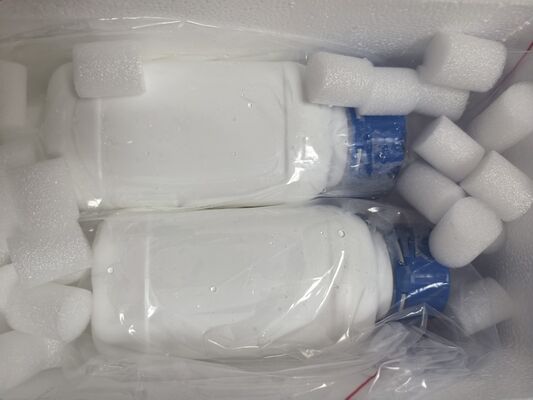
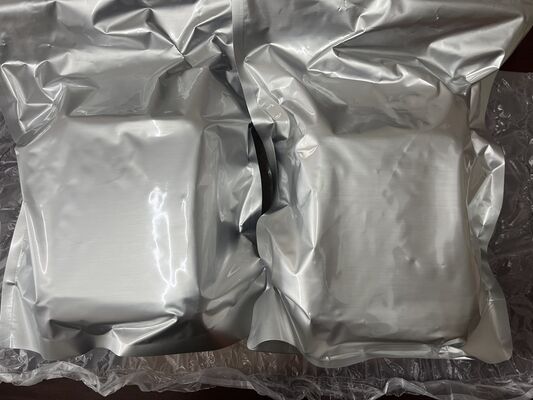
Packing: 1kg/5kg/10kg in vacuum aluminum foil bags.
Storage Conditions: Store at 2~8°C under refrigerated conditions.
Recommended Products
