


All Products
-
 Lara Schenk from BelgiumIt is Amazing that Feiming service exceed our expectation, really professional on consulting, customising, delivery, after-sale service.
 -
 Steven from the USAFeiming can supply a variety of high performance material with sufficient inventory, service is really terrific.
 -
 Kurt from SwitzerlandEverything is fine and the people are working on it . When I have some news I will share that then directly with you.
Contact Person :
Kevin Luo
Phone Number :
86-755-85232577
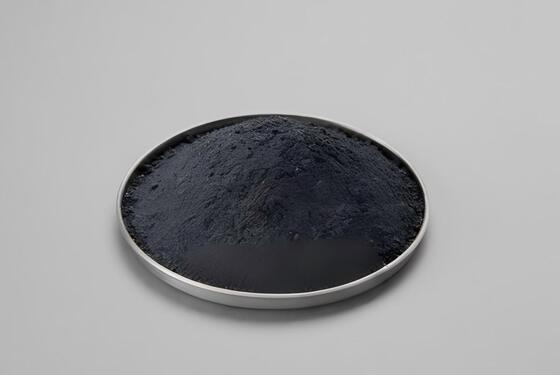
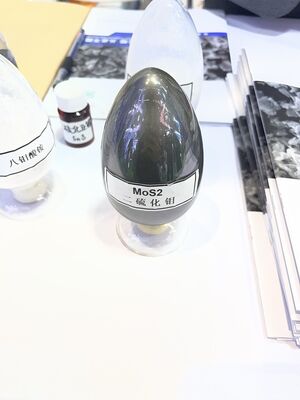
High purity Molybdenum disulfide MoS2 powder for solid lubricant grease lubricant additives and friction improver


| Place of Origin | China |
|---|---|
| Brand Name | N/A |
| Certification | COA |
| Model Number | MoS2 |
| Document | COA of MoS2_25091301.pdf |
| Minimum Order Quantity | 1kg |
| Price | USD40-60/kg |
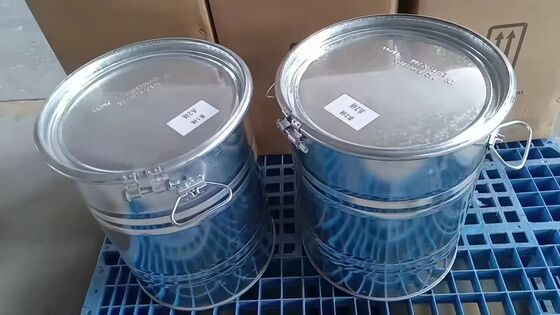
| Packaging Details | 25kg/drum |
| Delivery Time | 5-7 working days |
| Payment Terms | T/T, L/C, D/A, D/P, Western Union |
| Supply Ability | 10000kg/month |
Product Details
| Name | Molybdenum Disulfide | Synonyms | Moly Powder B; Molykote Microsize Powder; Molysulfide; Natural Molybdenite; T-Powder; |
|---|---|---|---|
| Appearance | Silver-black To Black Powder | CAS | 1317-33-5 |
| Purity | 99.0%,98.5% | MF | MoS2 |
| Molecular Weight | 160.07 | Application | Producing Solid Lubricant Grease, Lubricant Additives, Friction Improver And Molybdenum Metallic Compounds, Etc. |
| Highlight | Molybdenum disulfide solid lubricant,MoS2 grease lubricant additive,Hexagonal crystal metallic compound |
||
Product Description
Molybdenum disulfide (MoS2) is a layered transition metal dichalcogenide with hexagonal crystal system Mainly used for solid lubricant grease lubricant additives friction improver Mo metallic compounds
Specification of High purity Molybdenum disulfide (MoS2) CAS:1317-33-5
|
品 名 规 格 批 号 净 重 外 观 生产日期 |
产品质检书CERTIFICATE OF ANALYSIS Product Name: MoS2 Grade: ≥98.5% Lot No.: 25091301 Net weight: 800kg Appearance: Silver-black to Black Powder Manufacturing Date: 20250913 分析数据 Analytical Results |
|
| Item | Specification | Results |
| MoS2 % | ≥98.5 | 99.02 |
| MoO3 % | ≤0.10 | 0.07 |
| Fe % | ≤0.25 | 0.1 |
| SiO2 % | ≤0.20 | 0.09 |
| H2O % | ≤0.20 | 0.17 |
| Oil % | ≤0.40 | 0.24 |
| Total insoluble % | ≤0.50 | 0.25 |
| D50(µm) | <1.5 | 1.42 |
| Conclusion | Qualified | |
Description of High purity Molybdenum disulfide (MoS2) CAS:1317-33-5
Molybdenum disulfide (MoS2, CAS 1317-33-5) is a layered transition metal dichalcogenide (TMD) belonging to the hexagonal crystal system (2H polytype being the thermodynamically stable form). It exists as a black/grey solid with a density of 5.06 g/cm³ and a melting point of 2375 °C. Mainly used for producing solid lubricant grease, lubricant additives, friction improver and molybdenum metallic compounds, etc.
Applications of High purity Molybdenum disulfide (MoS2) CAS:1317-33-5
1. Nano-Additive Procurement for High-Performance Vegetable Oil-Based Lubricant Formulations
Based on the direct head-to-head four-ball tribometer evidence showing that MoS2 nano-additives deliver a 24.9% COF reduction and 12.3% WSD reduction—outperforming both hBN and graphite in palm kernel oil procurement of MoS2 nanopowder is indicated for formulators of bio-based industrial lubricants where maximum friction reduction is the primary performance metric. This scenario is particularly relevant for environmentally regulated sectors seeking to replace petroleum-based lubricants with vegetable oil-based alternatives without sacrificing tribological performance. The evidence also supports specification of MoS2 over graphite in Ni-based self-lubricating composites where lower and more stable friction coefficients are required .
2. Vacuum and Inert-Atmosphere Solid Lubrication for Aerospace and Precision Bearing Applications
MoS2 remains the industry-standard solid lubricant for vacuum environments (e.g., spacecraft mechanisms, satellite bearings) where its lamellar shear mechanism operates without oxidative degradation. The cold spray deposition study demonstrates that MoS2-based coatings achieve COF values as low as 0.03 ± 0.01 in dry nitrogen and vacuum at contact stresses up to 1386 MPa, with specific wear rates in the range of 3–7 × 10⁻⁶ mm³ N⁻¹ m⁻¹ . However, for applications exceeding ~350 °C in air, the thermal stability data indicate that WS2 (stable to ~425 °C) or graphite (stable to ~500 °C) should be selected instead . Procurement specifications should therefore explicitly state the operating atmosphere and temperature ceiling to guide MoS2 vs. WS2 selection.
3. Monolayer MoS2 Procurement for Low-Power Field-Effect Transistors and Optoelectronic Devices
For researchers and device manufacturers procuring 2D semiconductors for digital logic FETs, monolayer MoS2 is the TMD of choice where maximum on/off current ratio is the primary selection criterion. The literature benchmark of I_on/I_off = 8 × 10^8 for MoS2—substantially exceeding MoSe2 (1 × 10^6), WS2 (1 × 10^7), and WSe2 (1 × 10^7) —combined with a direct band gap of ~1.8–1.9 eV enabling efficient light emission and photodetection , makes monolayer MoS2 uniquely suited for ultra-low-standby-power logic and visible-range optoelectronics. Procurement should specify monolayer or bilayer thickness with >99% purity (commercially available via CVD on SiO₂/Si or sapphire substrates) to ensure the direct band gap property is realized. Where higher carrier mobility is paramount, WS2 (mobility up to 486 cm² V⁻¹ s⁻¹) may be preferred despite its lower on/off ratio.
4. MoS2 as an Anode Host Material for Sodium-Ion and Fast-Charging Lithium-Ion Batteries
The interlayer spacing of MoS2 (0.615 nm) is ~84% larger than that of graphite (0.335 nm), directly translating to superior Na⁺ intercalation kinetics and higher theoretical capacity for sodium-ion battery anodes . For research groups and battery manufacturers developing SIBs, procurement of MoS2 with controlled interlayer expansion (synthetically achievable up to 0.94 nm) is supported by evidence of enhanced rate capability . In applications where maximum interlayer spacing is the overriding criterion, MoTe2 (~0.70 nm intrinsic spacing) may be evaluated as an alternative, though MoS2 offers a more favorable balance of cost, availability, and structural tunability .
FAQ
Q1: What is your regular lead time for sample and official order?
A1: Sample lead time 5-7 days. Official order lead time 14-21 days.
Q2: What is your MOQ?
A2: MOQ usually is 1kg.
Q3: How you control product quality?
A3: From raw material inspection, dupro inspection to final product inspection are executed strictly.
Q4: What is your warranty policy?
A4: We will send you a new batch if there is any quality issue during warranty time
Q5: Do you refund if customer receive defective product and do not accept replacement?
A5: Yes
Recommended Products
