


All Products
-
 Lara Schenk from BelgiumIt is Amazing that Feiming service exceed our expectation, really professional on consulting, customising, delivery, after-sale service.
 -
 Steven from the USAFeiming can supply a variety of high performance material with sufficient inventory, service is really terrific.
 -
 Kurt from SwitzerlandEverything is fine and the people are working on it . When I have some news I will share that then directly with you.
Contact Person :
Kevin Luo
Phone Number :
86-755-85232577
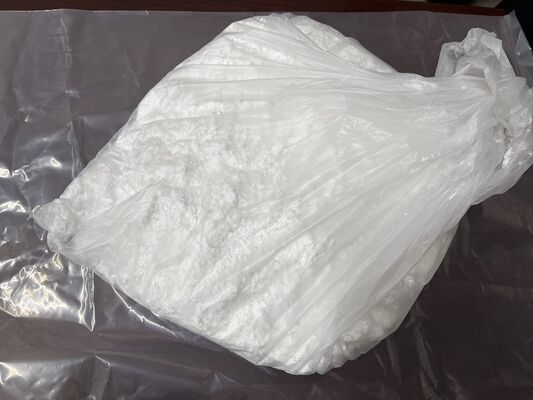
Methyl Nicotinate (MN CAS 93-60-7) for Topical Rubefacient Formulation Research, Skin Barrier Function Diagnostic Assays, and Transdermal Prodrug Modeling Studies


| Place of Origin | China |
|---|---|
| Brand Name | N/A |
| Certification | COA |
| Model Number | 93-60-7 |
| Document | COA of MN_20260113-1.pdf |
| Minimum Order Quantity | 1kg |
| Price | USD35-50/kg |
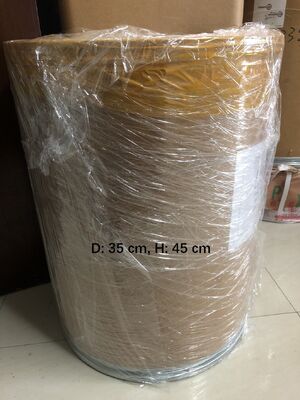
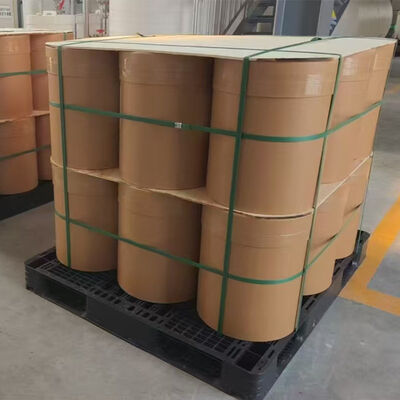
| Packaging Details | 20kg or 25kg/drum |
| Delivery Time | 5-8 working days |
| Payment Terms | T/T, L/C, D/A, D/P, Western Union |
| Supply Ability | 5000kg/month |
Product Details
| Product Name | Methyl Nicotinate | CAS | 93-60-7 |
|---|---|---|---|
| M. F. | C7H7NO2 | M. W. | 137.14 |
| Purity | ≥99.5% | Appearance | White To Light Yellow Crystal Powder |
| Application | Topical Rubefacient Formulation Research; Skin Barrier Function Diagnostic Assays; Transdermal Prodrug Modeling Studies; Read-Across Toxicological Assessment. | ||
| Highlight | Topical Rubefacient Formulation Research Methyl Nicotinate,Skin Barrier Function Diagnostic Assays Methyl Nicotinate,Transdermal Prodrug Modeling Studies Methyl Nicotinate |
||
Product Description
Methyl nicotinate (MN CAS 93-60-7) also known as nicotinic acid methyl ester or methyl pyridine-3-carboxylate is a pyridine-derivative methyl ester of vitamin B3 (niacin)
Description of Methyl nicotinate (MN CAS 93-60-7)
Methyl nicotinate (MN, CAS 93-60-7), also known as nicotinic acid methyl ester or methyl pyridine-3-carboxylate, is a pyridine-derivative methyl ester of vitamin B3 (niacin) with molecular formula C₇H₇NO₂ and molecular weight 137.14 g/mol . It is a white crystalline solid with a melting point range of 39–43 °C and a boiling point of 204–209 °C, exhibiting a logP of approximately 0.83, which reflects its balanced hydrophilic–lipophilic character . MN is classified pharmacologically as a topical rubefacient and peripheral vasodilator, acting via prostaglandin-mediated pathways upon transdermal delivery . It is commercially available at purities ≥99.0% (GC) and finds application as an active pharmaceutical ingredient in over-the-counter topical analgesic formulations, as a flavoring agent in food products, and as a versatile synthetic intermediate in medicinal chemistry.
Applications of Methyl nicotinate (MN CAS 93-60-7)
1. Topical Analgesic and Rubefacient Formulation Development Requiring Rapid Onset and Predictable Duration
Formulators developing over-the-counter topical analgesic sprays, gels, or patches should select MN over other nicotinate esters or capsaicinoids when the target product profile demands vasodilatory onset within 5 minutes and complete resolution within 2 hours [1][2]. MN's D/l² = 2.3 × 10⁻⁴ s⁻¹ diffusion parameter and peak effect at 15–30 minutes [1] provide a kinetic window that is both clinically validated and consumer-perceptible, while its sigmoidal pharmacodynamic profile imposes a natural ceiling effect that limits over-dosing risk [3]. This combination of attributes is not replicated by ethyl nicotinate or butyl nicotinate, which exhibit markedly lower transdermal flux [4], nor by capsaicin, which acts via TRPV1 agonism with a slower onset and potential for cumulative irritation.
2. Clinical Diagnostic Testing of Skin Barrier Function and Microvascular Reactivity (Niacin Patch Test)
Clinical researchers and diagnostic kit manufacturers should prioritize MN for standardized skin barrier function and microvascular reactivity assays based on its validated aqueous solution stability: degradation of only ~0.5% per annum at 4 °C with full retention of vasodilatory activity after 1,057 days [5]. This enables centralized production of pre-formulated, batch-controlled test solutions with multi-year shelf-life, eliminating the inter-batch variability that plagues freshly prepared nicotinate solutions. MN's rapid onset and radial dermal transport via convective blood-flow-mediated distribution [2] provide a more physiologically integrated readout of microvascular function than iontophoretically delivered agents (e.g., ACh, SNP), and MN's response has been demonstrated to differentiate between healthy and diabetic neuropathic subjects and between racial/ethnic groups with differing stratum corneum barrier properties .
3. Transdermal Prodrug Design and Dermatopharmacokinetic Modeling Studies
For academic and industrial laboratories engaged in transdermal prodrug design, MN serves as the benchmark small-molecule ester prodrug with the most comprehensively characterized simultaneous permeation-metabolism dataset across multiple skin models (human, hairless mouse, snake, shed snake skin) [4][7]. The 187-fold flux differential between MN and NA, and the difference in NA/total flux ratio among ester prodrugs reflecting chain-length-dependent esterase activity [4], make MN the preferred reference compound for validating in vitro-in vivo extrapolation (IVIVE) models of cutaneous prodrug activation. Its 60-fold permeation advantage over niacinamide—despite only a 15 Da MW difference [8]—further underscores its utility as a probe molecule for isolating the contributions of melting point, crystallinity, and lipid solubility to stratum corneum permeation independent of molecular size.
4. Read-Across Toxicological Assessment of Nicotinate Ester Structural Analogs for Regulatory Submissions
Regulatory toxicologists and safety assessors preparing dossiers for nicotinate ester analogs should leverage MN (CAS 93-60-7) as the preferred read-across analog based on its validated structural similarity (Tanimoto score threshold met), matching in silico structural alerts for genotoxicity endpoints (OECD QSAR Toolbox v4.5), and sufficient existing toxicological dataset [9]. MN has been formally used as a read-across analog for 2-pyridinecarboxylic acid, ethyl ester (CAS 2524-52-9), with expert judgment confirming that the structural difference between the methyl ester at position 3 and the ethyl ester at position 2 is toxicologically insignificant [9]. The identical sigmoidal pharmacodynamic profile shared by MN and HN [3] further supports the biological plausibility of class-based read-across among the nicotinate ester series, providing a cost-effective alternative to de novo toxicological testing.
Advantages of Methyl nicotinate (MN CAS 93-60-7)
1. Quick lead time
2. Low MOQ
3. Quality assured with COA
4. Full experience in shipping
5. Free consulting service
6. custom service welcome
FAQ
Q1: What is your regular lead time for sample and official order?
A1: Sample lead time 5-7 days. Official order lead time 14-21 days.
Q2: What is your MOQ?
A2: MOQ usually is 1kg.
Q3: How you control product quality?
A3: From raw material inspection, dupro inspection to final product inspection are executed strictly.
Q4: What is your warranty policy?
A4: We will send you a new batch if there is any quality issue during warranty time
Q5: Do you refund if customer receive defective product and do not accept replacement?
A5: Yes
Item Photo

Recommended Products