


All Products
-
 Lara Schenk from BelgiumIt is Amazing that Feiming service exceed our expectation, really professional on consulting, customising, delivery, after-sale service.
 -
 Steven from the USAFeiming can supply a variety of high performance material with sufficient inventory, service is really terrific.
 -
 Kurt from SwitzerlandEverything is fine and the people are working on it . When I have some news I will share that then directly with you.
Contact Person :
Kevin Luo
Phone Number :
86-755-85232577
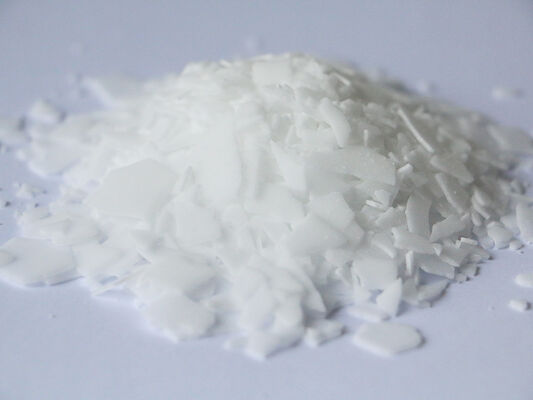
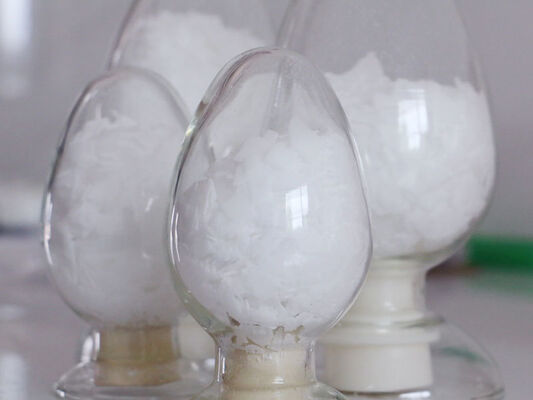
Diacetone Acrylamide (DAAM) White or Slightly Yellow Flake with Purity ≥99.0% and Melting Point 55.0~57.0℃


| Place of Origin | China |
|---|---|
| Brand Name | N/A |
| Certification | COA |
| Model Number | DAAM |
| Minimum Order Quantity | 1kg |
| Price | USD1-100/kg |
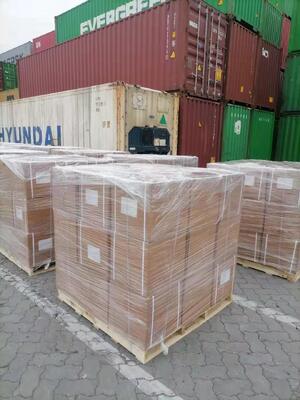
| Packaging Details | 20kg/carton,25kg/drum |
| Delivery Time | 5 working days |
| Payment Terms | T/T,L/C,D/A,D/P,Western Union |
| Supply Ability | 50000kg/month |
Product Details
| Product Name | Diacetone Acrylamide | Synonyms | DAAM |
|---|---|---|---|
| CAS | 2873-97-4 | MF | C9H15NO2 |
| Appearance | White Or Slightly Yellow Flake | Purity | 99.0% |
| Melting Point | 55.0~57.0℃ | Moisture | ≤0.5% |
| Highlight | White flake Diacetone Acrylamide,High purity DAAM,Melting point 55.0~57.0℃ Diacetone Acrylamide |
||
Product Description
DAAM owns two reactive groups N-substituted amides and Ketone easy for copolymerization with other vinyl monomer use for various adhesives thickener paper reinforcing agent crosslinking agent
Specification of Diacetone Acrylamide(DAAM) CAS No.: 2873-97-4
| Item | Specification |
| Appearance | White or slightly yellow flake |
| Purity | ≥99.0% |
| Melting point | 55.0~57.0℃ |
| Moisture | ≤0.5% |
| Acrylamide | ≤0.1% |
| Solubility (25℃ in water) | > 100g/ 100g |
Description of Diacetone Acrylamide(DAAM) CAS No.: 2873-97-4
Diacetone acrylamide (DAAM; CAS 2873-97-4), IUPAC N-(2-methyl-4-oxopentan-2-yl)prop-2-enamide, is a white crystalline solid (mp 53–58°C) belonging to the acrylamide class of vinyl monomers. It features two distinct reactive groups: a polymerizable acryloyl double bond and a pendant ketone carbonyl, enabling both free-radical copolymerization and post-polymerization crosslinking via keto-hydrazide chemistry . DAAM is hygroscopic, exhibits long shelf stability with no spontaneous polymerization on prolonged storage, and forms stable 50% aqueous solutions at pH 7.5–7.7 for up to six months . Its polymerization behavior resembles that of acrylic esters, yielding high-molecular-weight polymers in bulk, solution, or emulsion systems, and it is particularly suited for electropolymerization.
At room temperature, DAAM is white powdery or flaky crystal, soluble in water and organic solvents such as formaldehyde, ethanol, acetone, tetrahydrofuran, ethyl acetate, acrylonitrile, styrene,etc. The product is extremely easy to form polymer by copolymerization with various monomer and achieve strong water absorption, but it is insoluble in ethane, petroleum ether.
DAAM owns two reactive groups, namely N - substituted amides and ketone, it is extremely easy for copolymerization with other vinyl monomer, thus the introduction of ketone carbonyl chemical properties can lead polymer to crosslinking and graft reaction, which can prepare various adhesives, thickener, paper reinforcing agent, crosslinking agent, etc.
It has been widely used in fields like coatings, adhesives, daily chemical industry, the epoxy resin curing agent, photosensitive resin additives, textile auxiliaries, health care, ect.
Application of Diacetone Acrylamide(DAAM) CAS No.: 2873-97-4
1.Self-Crosslinking Acrylic Emulsions for Coatings:
Formulators seeking formaldehyde-free, one-component ambient-cure systems select DAAM for its unique ability to introduce pendant ketone groups into acrylic copolymer backbones. Upon addition of adipic acid dihydrazide (ADH), crosslinking occurs post-film-formation as water evaporates and pH drops due to ammonia volatilization. This keto-hydrazide chemistry yields a three-dimensional polymer network with enhanced abrasion resistance, scrub resistance, stain resistance, blocking resistance, moisture resistance, solvent resistance, and substrate adhesion . The crosslinking is non-reactive in the wet emulsion state, ensuring long-term formulation stability. This scenario directly leverages DAAM's dual-functional group architecture—a capability absent in simpler N-alkyl acrylamides like N-tert-butylacrylamide or N,N-dimethylacrylamide, which lack a second reactive handle for post-polymerization crosslinking.
2.Hair care agent:
One important characteristic of DAAM is that its homopolymer or copolymer are insoluble in water, but their water absorption rate can reach 20% ~ 30% of its weight, when the environment humidity is less than 60%, they can even release the moisture, then the hair spray can be produced by means of such characteristic.
2. Photosensitive resin:
Photosensitive resin produced by light, hard, acid and alkali- resistant solid diamine homopolymer has high resin photographic speed, the non-affected part is easy to be removed after exposure, thus getting a clear paper layout with good strength and resistance to water.
Another important application of DAAM is that it can partly replace gelatin, which is used for photographic emulsions and difficult to be replaced by other ideal products. Gelatin has long been in short supply for high purity of photographic, 2500 tons of gelatin are expected for photosensitive materials, while domestic photographic gelatin production is only hundreds of tons at present.
3. Used for the preparation of plastic letterpress print.
4. Used for adhesives:
used as adhesive promoter and improver for fiber compounds, cement, glass, aluminium and PVC, meanwhile it can also be compressed to produce pressure-sensitive adhesives, and can be used as heat-sensitive adhesives for paper, textiles and plastic film with allyl polymer.
5. The application in other aspects:
⑴ can be used as curing agent for epoxy resin, anticorrosive paint of ship bottom, underwater paint of ship bottom, acrylic resin coatings, unsaturated polyester paint, etc;
⑵ The water-soluble copolymer monomer of DAAM was effectively applied to the clarification of suspended solid;
⑶ Can be used as the laser recording materials produced by heat;
⑷ Used as glass fuzzy remover;
⑸ Used as composition of water-soluble photosensitive resin;
⑹ Used for water-soluble paints.
Package and Storage of Diacetone Acrylamide(DAAM) CAS No.: 2873-97-4
20kg / carton; It shall be transported as general chemicals and stored in a dry and cool place to avoid direct sunlight.
FAQ
Q1: What is your regular lead time for sample and official order?
A1: Sample lead time 3 days. Official order lead time 7-14 days.
Q2: What is your MOQ?
A2: MOQ usually is 1kg.
Q3: How you control product quality?
A3: From raw material inspection, dupro inspection to final product inspection are executed strictly.
Q4: What is your warranty policy?
A4: We will send you a new batch if there is any quality issue during warranty time
Q5: Do you refund if customer receive defective product and do not accept replacement?
A5: Yes
Item Photo

Recommended Products